
A business project can appear convincing on paper while remaining commercially unproven, financially fragile or impossible to execute with the resources available. The problem is not necessarily the quality of the idea. It is the distance between what the entrepreneur believes will happen and what prospective customers, suppliers and operating conditions actually demonstrate.
Testing a business project means reducing that uncertainty before making commitments that are difficult to reverse. Instead of developing a complete product, renting premises or leaving employment immediately, an aspiring entrepreneur can investigate customer problems, measure genuine purchasing intentions, test delivery capabilities and challenge financial assumptions.
A useful validation process does not need to eliminate every risk. It needs to identify the uncertainties that could destroy the project, gather proportionate evidence and establish a credible basis for deciding what to do next. In France, this approach also requires attention to the legal framework for testing an activity, existing employment obligations and the conditions attached to possible transition arrangements.
Business project validation: the essential decisions
- Identify the two or three assumptions that could make the project unviable, then design inexpensive tests that could disprove them.
- Prioritise observable customer commitments over enthusiasm, and test the economics of delivering the offer separately from demand.
- Set decision criteria, resource limits and exit conditions before testing so that the results support a genuine launch, adjustment or pause decision.
- Why Can a Promising Business Project Fail Before Reaching the Market?
- How Can You Validate a Business Project Without Building the Full Offer First?
- Launch, Adjust or Pause: What Should You Do After Testing a Business Idea?
- Which Assumptions Can Make a Business Project Look Stronger Than It Really Is?
- When Is a Business Project Validated Enough to Move Into Full Execution?
- When Should an Entrepreneurial Project Move From Exploration to Execution?
- Which Resource Constraints Are Most Often Missed Before a Business Project Starts?
- How Can You Build an Entrepreneurial Project That Stands Up to Real-World Testing?
Why Can a Promising Business Project Fail Before Reaching the Market?
A promising business project can fail before launch because its apparent potential depends on assumptions that have never been tested. Customers may not experience the expected problem, demand may emerge too late, or the entrepreneur may lack the resources needed to deliver the offer. Market uncertainty and execution uncertainty require different tests.
Market-related failure occurs when the intended customer does not value the proposed solution sufficiently, cannot afford it or has no reason to switch from an existing alternative. Poor timing can produce a similar outcome: a relevant offer may reach customers before they are ready to adopt it.
Execution-related failure occurs when demand exists but the founder cannot fulfil orders reliably, obtain necessary inputs, manage operational complexity or finance the period before customers pay. A successful customer interview cannot resolve a supply-chain problem, just as a functional prototype cannot demonstrate market demand.
A further difficulty is confirmation bias. Entrepreneurs who believe strongly in their ideas may preferentially interview supportive people, emphasise favourable comments or reinterpret rejection as evidence that customers need more education.
A structured test counteracts this tendency by recording the hypothesis, the intended observation and the result that would count as failure before collecting feedback. The purpose is not to prove that the founder is right, but to discover what would make the proposed business wrong.
Time allocation provides another useful diagnostic. Consider a hypothetical founder with 40 hours available for initial exploration. Spending 35 hours building presentation materials and five hours speaking to customers leaves little opportunity to challenge demand. Reallocating effort towards targeted interviews and purchasing tests could reveal objections before substantial production begins. These numbers illustrate a planning trade-off, not an established optimal ratio.
The academic article The Lean Startup Framework: Closing the Academic–Practitioner Divide, by Shepherd and Gruber, discusses hypothesis testing, customer development and progressive entrepreneurial investment. Its framework supports learning through experimentation rather than treating initial plans as established facts.
The next task is to design tests that address those specific risks without paying for a fully developed offer.
How Can You Validate a Business Project Without Building the Full Offer First?
A business project can be validated progressively through customer interviews, landing-page experiments, reservation requests, pre-sales and minimal prototypes. The appropriate method depends on the uncertainty being tested. Start with inexpensive discovery, then seek stronger evidence of customer commitment before investing in development or operational infrastructure.
The first step is to identify the two or three critical assumptions on which the project depends. Typical examples are whether the target customer experiences the problem frequently, whether that customer will pay the proposed price, and whether the solution can be delivered at an acceptable cost.
Testing the idea as a whole is too vague. Each assumption needs a separate question, observation method and decision criterion.

Testing methods can be organised by increasing commitment and operational complexity.
| Test | Evidence collected | Principal limitation |
|---|---|---|
| Problem interviews | Customer difficulties, existing alternatives and actual behaviour | Statements do not establish willingness to buy |
| Landing page | Sign-ups, qualified enquiries and expressed purchase intentions | Clicks and registrations may not convert into sales |
| Reservation or pre-sale | Specific customer commitments under defined conditions | Fulfilment and legal obligations must be assessed |
| Minimal prototype | Practical usability, delivery effort and customer response | A small pilot does not establish scalable profitability |
Interest is not commitment. A prospect saying that an offer is interesting provides weaker evidence than someone requesting a quotation, spending time on a detailed trial or accepting a clearly defined paid engagement. Even a pre-order needs interpretation: cancellations, delivery conditions and the origin of customers affect its significance.
In France, the Bpifrance Création guidance on validating a market before launching recommends combining documentary research with field observations and customer feedback. It distinguishes declarations of interest from stronger commercial signals such as quotations, reservations, pre-orders and purchases.
Testing does not automatically require immediate company registration, but the nature of the activity matters. Informational interviews and non-transactional demonstrations differ from accepting payment, performing regulated work or entering binding commercial obligations. A contractual promise is not a blanket exemption from registration or other legal requirements.
One French arrangement worth examining is the official Service Public guidance on the contrat d’appui au projet d’entreprise (Cape). This framework allows eligible entrepreneurs to prepare and test an activity with an accompanying organisation under specified contractual conditions. Eligibility is restricted, and a full-time employee cannot benefit from the Cape.
Five actions to prepare a lean validation test
- Write the customer problem and proposed solution in one paragraph; deliverable: a one-page problem statement.
- Rank the three assumptions most likely to invalidate the project; deliverable: a prioritised risk register.
- Choose a measurable test for each critical assumption; deliverable: a test sheet specifying participants, observations and failure criteria.
- Record actual behaviour without changing the original criteria; deliverable: an evidence log containing results and limitations.
- Compare the results with predefined thresholds and resource limits; deliverable: a written decision to proceed, adjust or stop.
Once these tests have generated observations, the entrepreneur must decide whether the evidence supports the original concept or requires a change in direction.
Launch, Adjust or Pause: What Should You Do After Testing a Business Idea?
After testing a business idea, choose between launching, adjusting and pausing according to criteria established before the experiment. Launch when essential assumptions receive sufficient support, adjust when a specific weakness appears correctable, and pause when critical evidence is missing, contradictory or too expensive to obtain responsibly.
The decision should not depend on how much effort has already been invested. Time and money spent on an unsuccessful test are not recovered by committing more resources to an unsupported proposition.
A simple decision framework makes this distinction explicit.
| Decision | Typical evidence | Next action |
|---|---|---|
| Launch | Repeated customer commitments, feasible fulfilment and acceptable preliminary economics | Begin controlled execution with defined limits |
| Adjust | Demand exists, but price, customer segment, channel or delivery method is problematic | Change one important assumption and retest |
| Pause or stop | Critical assumptions fail or the remaining uncertainty exceeds available resources | Preserve resources and document the decision |
The nature of the failed assumption determines the adjustment. If consumers do not experience the proposed problem, changing the product’s visual design is unlikely to help. A different customer segment or problem may need investigation. If customers want the service but delivery takes too long, the more relevant changes concern processes, scope or pricing.
Another danger is the perpetual pivot. Repeatedly changing the offer can create the appearance of progress while avoiding a definitive decision. To control this, entrepreneurs can set a maximum exploration budget covering both working hours and expenditure, together with a limit on the number of material retests.
Hypothetical example: testing a local subscription service
A founder tests a weekly subscription offer with prospective customers. Several people express enthusiasm, but few accept the proposed paid commitment. Follow-up conversations reveal that occasional purchasing fits their needs better than a recurring subscription.
The evidence does not necessarily disprove demand for the underlying service. It questions the subscription model. A time-limited test of individual purchases could therefore be justified, provided the founder has sufficient resources and defines the decision criteria in advance.
Predefined criteria also protect against reinterpretation after disappointing results. If the initial threshold is missed, the appropriate response is to explain what changed in the evidence, not quietly redefine success.
Before accepting a favourable result, however, the entrepreneur should examine whether optimistic assumptions have made the project appear stronger than the evidence supports.
Which Assumptions Can Make a Business Project Look Stronger Than It Really Is?
A business project often looks stronger than it really is when forecasts rely on unverified market size, conversion rates, purchasing behaviour or founder availability. These assumptions can compound through the business plan, making revenue and profitability projections appear precise despite weak supporting evidence. Personal capacity and access to customers deserve equal scrutiny.
Four commercial assumptions are particularly easy to overestimate: the share of a market that can realistically be reached, the percentage of prospects who will purchase, the amount each customer will spend, and the expectation that word-of-mouth referrals will generate demand without sustained acquisition effort.
These variables are connected. An overestimated conversion rate inflates expected sales; an overestimated average order value then amplifies the revenue error. The apparent precision of the spreadsheet does not make its inputs reliable.
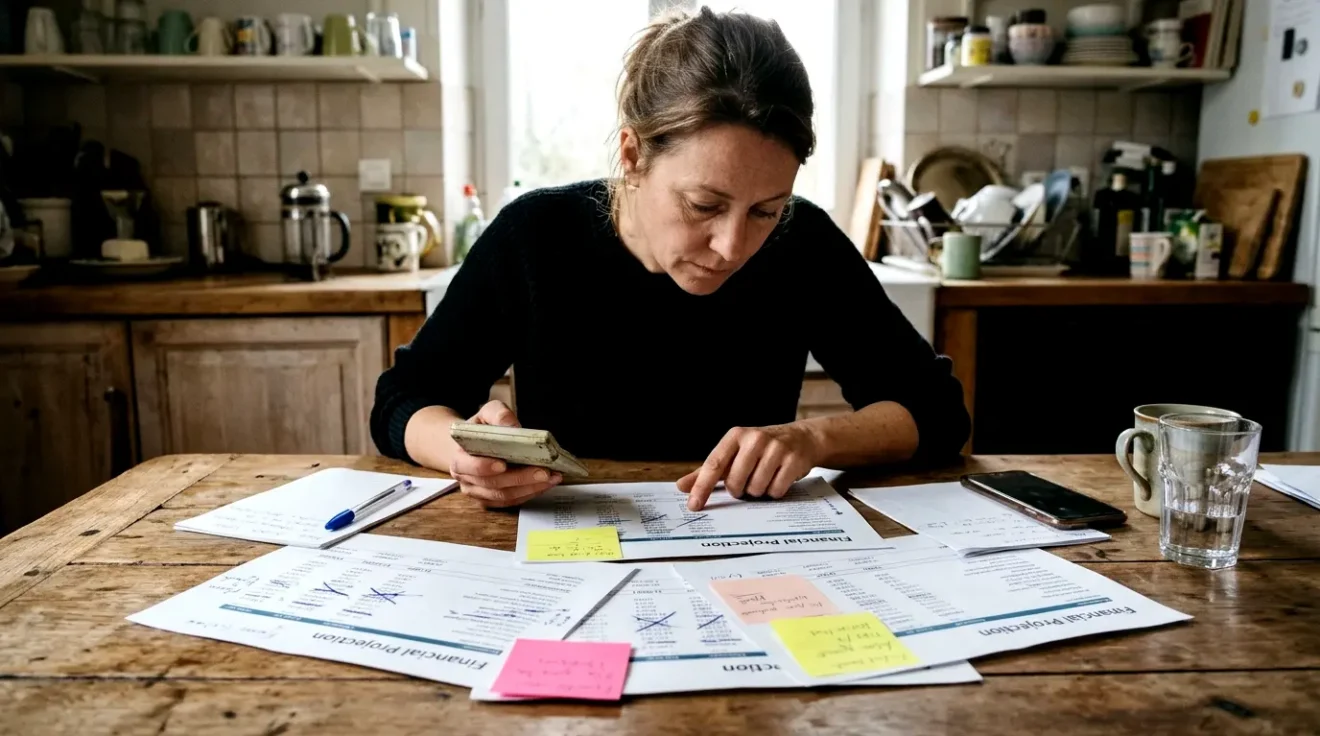
For a hypothetical illustration, suppose a founder forecasts 1,000 qualified visitors, a 5% conversion rate and an average purchase of €80. The projected revenue is €4,000. If the actual conversion rate is 2% and the average purchase is €60, revenue becomes €1,200. The difference arises from assumptions rather than an arithmetic error. Neither scenario represents an empirical benchmark.
A useful discipline is to classify every critical assumption by its evidence quality:
- Proven within a defined test: directly observed through a relevant transaction, measurable behaviour or verified operating result.
- Plausible: supported by market information or indirect evidence, but not yet demonstrated in the specific business context.
- Assumed: based mainly on expectations, intuition or unsupported forecasts.
The labels should reflect the scope of the test. A handful of paid transactions can demonstrate demand among those particular customers without proving demand across an entire region.
Next, recalculate the business plan using only demonstrated inputs, treating unknown variables as unresolved rather than silently substituting optimistic estimates. If a meaningful forecast cannot yet be produced, that is itself a useful finding: the remaining assumptions must be tested or managed through conservative scenarios.
Personal assumptions are equally important. An entrepreneur may expect to develop sales skills immediately, sustain a demanding workload indefinitely, receive household support or finance personal expenses until the business generates income. Each expectation should be checked against concrete circumstances.
Once these dependencies are visible, the project can be assessed against realistic criteria for moving beyond validation.
When Is a Business Project Validated Enough to Move Into Full Execution?
A business project is sufficiently validated for execution when its most consequential uncertainties have been reduced to a manageable level. This typically requires repeated evidence of demand, a credible way to acquire customers, preliminary confirmation that delivery costs are sustainable, and the ability to reproduce an initial sale without relying on exceptional circumstances.
No universal number of interviews, customers or pre-orders determines readiness. The appropriate evidence depends on purchase frequency, transaction value, operational complexity and the consequences of failure.
Demand validation and business-model validation are different. Customers may willingly purchase an offer that costs more to deliver than it earns. A successful pilot must therefore be examined from both perspectives.
For demand, assess whether unrelated customers make comparable commitments, whether a repeatable problem motivates them and whether the observed behaviour remains credible beyond the founder’s immediate network.
For economic viability, examine the revenue generated per transaction, variable fulfilment costs, customer acquisition spending, payment delays and the resources required to serve additional customers. Estimated customer lifetime value should remain explicitly uncertain until retention and repeat purchasing have been observed.
A useful execution-readiness review asks whether the founder can make another sale through a repeatable process, fulfil it at an acceptable cost, and explain what additional resources growth will require. One exceptional customer cannot answer all three questions.
Validation also has an opportunity cost. Continuing to test indefinitely may delay revenue, reduce motivation or cause the project to miss a relevant market window. Those risks are reasons to define exit criteria, not to ignore outstanding uncertainties.
When the remaining risks are limited and manageable, a controlled launch can provide information that a non-commercial test cannot. Execution does not require abandoning experimentation; it changes the setting in which further learning takes place.
Commercial readiness is only one condition for execution. The founder must also determine whether personal and organisational circumstances allow the transition.
When Should an Entrepreneurial Project Move From Exploration to Execution?
An entrepreneurial project should move from exploration to execution when commercial evidence supports the next investment and the entrepreneur can realistically reorganise time, income and obligations around the business. Even a validated opportunity may need to wait until employment arrangements, household finances and operational responsibilities make the transition sustainable.
The distinction matters because project validation answers whether an opportunity deserves further investment, whereas transition planning answers when the entrepreneur can responsibly make that investment.
Observable signals include recurring customer requests that exceed the founder’s current capacity, significant working time already devoted to fulfilment or testing, and opportunities being lost because the business lacks an appropriate operating structure.
These signals must be weighed against the founder’s existing commitments. Employment contracts may create obligations relating to confidentiality, competition or other professional activities. Household expenses, dependants and personal income requirements also affect the realistic transition date.
In France, some employees considering resignation for business creation or professional reconversion may qualify for unemployment benefits under specific conditions. France Travail‘s guidance on resignation for professional reconversion describes requirements that include a qualifying employment situation, professional history, advice obtained before resignation and prior recognition of the project’s genuine and serious nature.
In particular, the framework described by France Travail includes at least 1,300 days worked during the preceding 60 months for qualifying applicants, alongside other conditions. The conseil en évolution professionnelle (CEP) must be requested before resignation, and the project must receive the required prior assessment. Benefit entitlement is never automatic. Individual eligibility and the applicable procedure must be verified before taking an irreversible employment decision.
The appropriate transition can therefore be gradual: continue a permitted test alongside employment, organise the necessary administrative steps, secure sufficient personal financial capacity, then move into fuller execution when the conditions align.
That feasibility depends heavily on resources entrepreneurs may not have included in their original project budget.
Which Resource Constraints Are Most Often Missed Before a Business Project Starts?
The resource constraints most frequently overlooked in early project planning include realistic weekly availability, personal financial reserves, sustained mental capacity, customer access and practical execution skills. Money allocated to building the business is not equivalent to money available for living expenses. A project can be commercially attractive yet impossible to pursue within the founder’s actual constraints.
Time should be measured rather than estimated from ambition. A founder can record the hours available after employment, commuting, household responsibilities and recovery needs over several representative weeks. The resulting capacity may be substantially lower than the time originally assumed.
Personal cash reserves should be evaluated separately from business expenditure. Essential household costs continue even when the venture has no income. The required buffer depends on individual obligations, income alternatives and the uncertainty of the proposed business; it should not be confused with a guaranteed runway.
Less tangible constraints may be more difficult to resolve than a funding gap. A founder may lack access to distribution networks, established credibility in the target sector or the technical knowledge needed to deliver the service independently.
The dominant constraint test is a practical way to prioritise planning. Identify the resource that most strongly limits the project’s next stage and assess whether the proposed validation method can operate within it. If the founder has very little available time, for example, an elaborate prototype may be unrealistic even if its financial cost is low.
Early contracts can intensify resource pressure. Commercial leases, equipment purchases, subscriptions and supplier commitments may create fixed costs before market assumptions have been adequately tested. The relevant question is not simply whether the expense is affordable today, but whether the obligation remains manageable if the test fails.
Preference should therefore be given to short commitments, limited trials, temporary access to equipment and arrangements that preserve the option to stop, where practical and legally appropriate.
With these limitations made explicit, validation can become a coherent operating process rather than a collection of disconnected experiments.
Key takeaways before committing further
- The next investment should be justified by evidence about the project’s most consequential uncertainty, not by the amount already spent.
- Commercial results, operating capacity and personal circumstances must all support the intended level of commitment.
- Every major decision should preserve flexibility where possible and trigger a defined review when new evidence becomes available.
How Can You Build an Entrepreneurial Project That Stands Up to Real-World Testing?
A business project becomes resilient to real-world testing when its assumptions are explicit, its experiments address identifiable risks, and its financial and personal commitments remain proportionate to the evidence. The objective is to create a repeatable decision process: test what matters, interpret results consistently, invest progressively and revise the plan when reality contradicts expectations.
The process begins with an evidence register that connects each important assumption to a specific test. Customer demand, price acceptance, delivery costs, sales capabilities and founder availability should not remain vague statements in a business plan.
For each assumption, record the observation needed, the test’s resource requirements, the conditions for passing or failing, and the decision that follows. This creates a direct relationship between learning and expenditure.
The next principle is reversibility. Decisions should be prioritised not only by their apparent importance but also by the difficulty of undoing them.
Interviewing customers, creating a demonstration or running a limited experiment generally preserves greater flexibility than signing a long-term lease or making a substantial non-refundable equipment purchase. Some commitments are necessary to enter a market, but they should follow the evidence that specifically justifies them.
A practical review routine can then maintain alignment between expectations and observed reality:
- Review the critical assumptions that still lack direct evidence.
- Compare the results collected with the criteria fixed before each test.
- Record the time, cash and other resources already consumed.
- Identify new dependencies or operational risks exposed by the experiments.
- Decide which assumption to test next, which commitment to authorise and which activities to discontinue.
The review frequency should reflect the pace of activity and the consequences of upcoming decisions. A project approaching a major contractual commitment warrants closer examination than one conducting occasional exploratory interviews.
It is also important to distinguish changing the plan because new evidence has emerged from changing it merely to preserve enthusiasm. A documented rationale for each major adjustment helps maintain that discipline.
A validated project is not a risk-free project. Customer behaviour may change, competitors may react, costs may increase and the founder’s circumstances may evolve. What matters is whether the business has a credible mechanism for detecting those changes before they become disproportionately expensive.
For the next practical step, write down the project’s three most consequential unknowns, define one observable test for each, and set a maximum amount of time and money to spend before reviewing the results. That small decision framework provides a stronger foundation for execution than an elaborate plan built entirely on expectations.
Can a business idea be tested while working full-time?
Customer research, non-transactional experiments and early planning can often be organised around existing employment, subject to contractual obligations and applicable legal rules. However, not every commercial test can be conducted without registration or a suitable legal framework. In France, the Cape arrangement excludes full-time employees, so eligibility for specific testing arrangements must be checked individually.
Does receiving a pre-order mean a business idea is validated?
A genuine pre-order provides stronger evidence of purchasing intent than a favourable interview, but one transaction does not validate the entire business model. The entrepreneur must still consider repeatability, fulfilment obligations, delivery costs, cancellations and whether comparable customers will make similar commitments.
How much should an entrepreneur spend on initial validation?
There is no universal validation budget. The appropriate amount depends on the risk being tested, the founder’s financial capacity and the cost of obtaining meaningful evidence. Start with the least expensive reliable test, establish a maximum exploration budget and authorise further spending only when the observations justify it.
What if potential customers are interested but nobody commits to buying?
Investigate whether the problem is sufficiently important, whether the price is acceptable, whether customers trust the offer and whether the proposed purchasing process creates unnecessary friction. Interest without commitment does not establish demand. A narrower customer segment or revised proposition may deserve a limited retest, but repeated weak signals should lead to a clear pause or stop decision.
Is it necessary to complete a detailed business plan before testing customers?
A complete financial model is not necessarily required for initial customer discovery. A concise description of the customer problem, the proposed solution and the main assumptions can be sufficient to begin. However, significant spending, financing decisions or contractual commitments require a more developed assessment of costs, cash needs, operational feasibility and risks.